
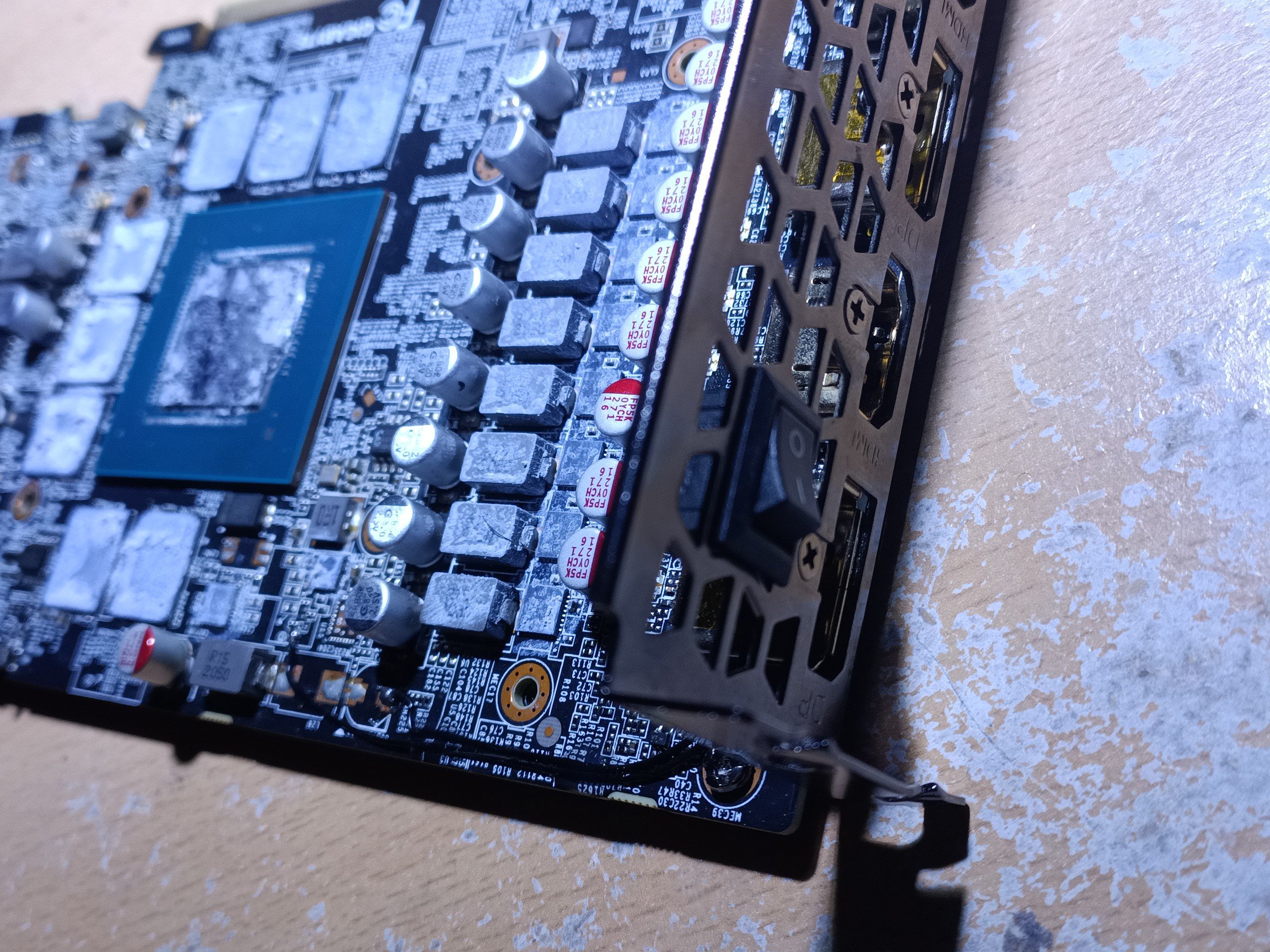
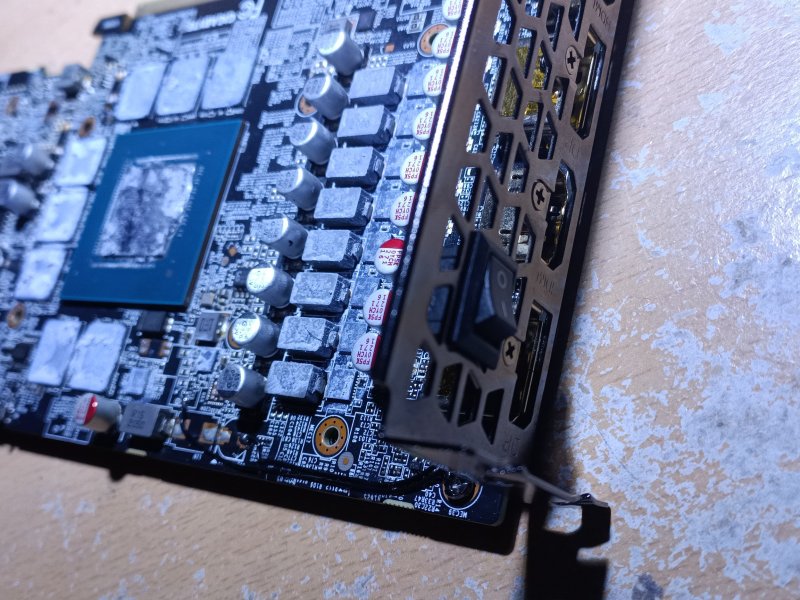
Modern games are quite often limited by the amount of volatile memory available to the GPU. Games can require many gigabytes of data during the rasterization process. So the obvious solution for better performance would be to buy a faster GPU, right? Well, not for [AssassinWarlord], who decided to find just what happens when you double the VRAM on an RTX 3070. The forum post is in German, but a translator gets the job done rather nicely.
For those of you following along at home, you will need a set of eight Samsung K4ZAF325BM-HC16 GDDR6 memory modules. In this case, the memory modules were salvaged from an AMD RX6900XT with a defective core. Naturally, you will need to re-ball the chips. To help the process, [AssassinWarlord] bought a stencil from AliExpress, with a 3D-printed holder for the memory modules.
It was a bit of a headache getting the card to actually reach the higher power states that the increased memory allows. Changing the “shunt” resistors allows the card to increase its power draw, but this proved ineffective. Some tuning and memory speed mapping at last proved successful in running the card stably.
But what happens when you benchmark the card? Well, not much. Most synthetic loads are compute-bound, not memory-bound. Therefore, overclocking the GPU would yield a greater performance increase than merely changing the memory modules. However, in some game titles, there is a marked performance benefit by nature of relying less on the glacially slow system memory. Is the performance difference worth the time and effort? No, probably not. The games that see an uptick in performance are few and far between (for now), so it’s not exactly a good effort-to-performance ratio.
If you are looking to follow along at home, make sure to check out this memory transplant next!
Thanks, [f!P[z]y] for the tip!
Source: Blog – Hackaday