
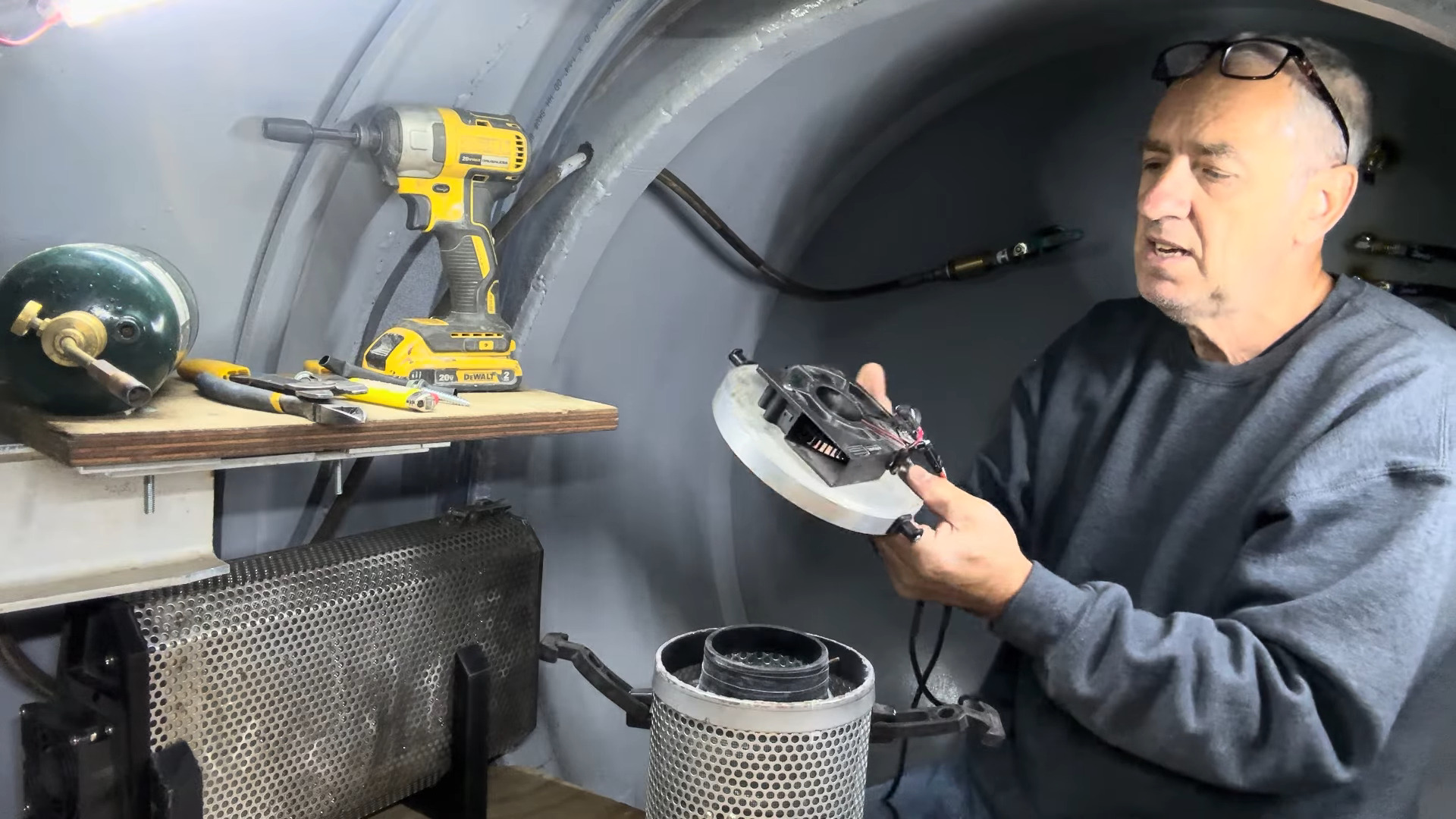
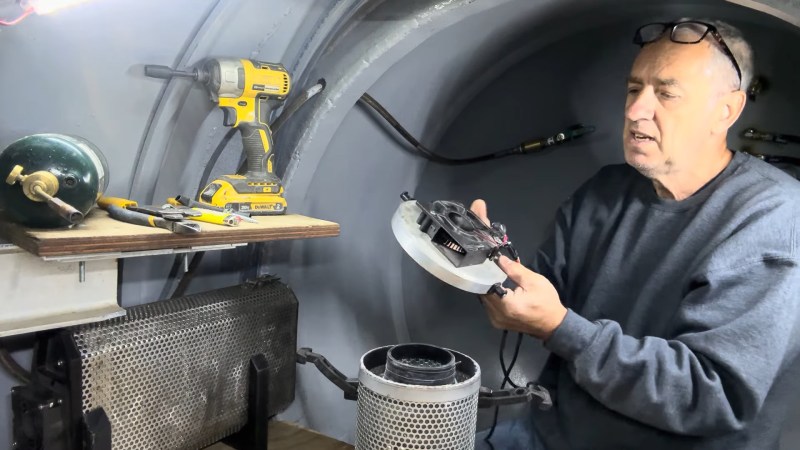
If you look around your environment, you can probably pick off quite a few things that you’ve made, at least if you’ve been at this a while. You probably aren’t reading this from the bottom of a body of water though, which means you lack the incredible confidence of submarine builder [Hank Pronk]. Not only is he building himself a capable-looking diesel-electric submarine over on YouTube, he’s even DIYing CO2 scrubbers for it! Yeah, that’s a man who believes in himself.
Luckily [Hank] is not anywhere near the Caribbean, so needn’t worry about being misidentified as a narco-sub, but he still has to be concerned about his oxygen supply when tooling around beneath the local lakes. Perhaps more important than the oxygen supply in a sub is the build up of CO2. It doesn’t matter how many oxygen tanks you bring down with you if you can’t scrub CO2 out of the air to make room for it. Just like the Apollo missions, he’s using a chemical adsorbent to take carbon dioxide out of the air — and just like Apollo 13, he’s switching from square to round.
Or, rather, from a rather rectangular commercial model to a DIY little round unit. That’s because he doesn’t need the big scrubber in this sub: being diesel-powered, he expects to spend a lot of time at snorkel depth, where both the pilot and the engines can get clean air through the tube. Dives are expected to be short, and in that use case, too big of a CO2 scrubber is really a waste. If for some reason he gets stuck on the bottom, well, the lake isn’t that deep. He can swim to surface, and has a detailed bailout plan. If he wants to stay under overnight to avoid bailing at night, he’s carrying enough extra adsorbent for that.
There’s a reason almost every submarine we’ve featured on this site over the years is an ROV. It’s not that a homemade submarine is automatically a death trap, but you sure do have to be confident in your design.
Source: Blog – Hackaday